Most people interact with the legal system only when something goes wrong. But the legal system interacts with you constantly, shaping what you can say, who you can marry, what happens if you're arrested, and what a corporation owes you when it serves you something that causes harm. Most of that happens invisibly, through decisions made in courtrooms decades ago that quietly rewired the rules everyone lives by.
These are ten of those decisions, presented in chronological order, with an honest look at what they actually decided and why it still matters.
Brown v. Board of Education (1954)
The Supreme Court's unanimous decision that racial segregation in public schools was unconstitutional overturned the "separate but equal" doctrine established by Plessy v. Ferguson in 1896. Chief Justice Earl Warren wrote that separate educational facilities are inherently unequal, a conclusion that seems obvious now and was bitterly contested then.
The immediate impact was on school desegregation, but the broader impact was on the legal legitimacy of segregation itself. Brown didn't end racism or even end segregation quickly, implementation was agonizingly slow and actively resisted for years, but it removed the constitutional scaffolding that had supported state-sanctioned racial separation and set the legal framework for the civil rights legislation that followed.
Engel v. Vitale (1962)
The New York State Board of Regents wrote a brief, nondenominational prayer and directed it be recited in public schools each morning. The Supreme Court ruled 6-1 that this violated the Establishment Clause of the First Amendment. Government-sponsored prayer in public schools, even voluntary and nondenominational, was unconstitutional.
This decision remains one of the most controversial the Court has ever issued and continues to generate litigation. It established the principle that public schools are not permitted to organize or sponsor religious activity, a rule that shapes everything from graduation ceremonies to football game invocations. If you went to a public school and never had a teacher-led prayer, this case is part of why.
Gideon v. Wainwright (1963)
Clarence Earl Gideon was charged with breaking and entering in Florida, couldn't afford a lawyer, asked the court to appoint one, and was told that Florida only appointed counsel in capital cases. He represented himself, was convicted, and handwrote a petition to the Supreme Court from prison. The Court ruled unanimously that the Sixth Amendment's guarantee of the right to counsel applied to state criminal proceedings through the Fourteenth Amendment.
The result was the public defender system as it exists today. Every person charged with a serious crime in the United States has the right to an attorney, and if they can't afford one, the state must provide one. The system is underfunded and overburdened in most jurisdictions, but the right itself, established by a man who had no lawyer, is foundational.
New York Times Co. v. Sullivan (1964)
An Alabama public safety commissioner sued the New York Times over an advertisement that contained some factual errors about civil rights protests. The Supreme Court ruled that the First Amendment limits the ability of public officials to sue for defamation, establishing that a public official must prove "actual malice," meaning the defendant knew the statement was false or acted with reckless disregard for its truth, to win a defamation case.
This decision is the foundation of modern American press freedom. Without it, public officials could use defamation suits to silence critical coverage by making the cost of being wrong prohibitively high. It's why journalism can report aggressively on government conduct without existential legal risk from every factual error, and it's why the standard for defamation claims by public figures remains significantly higher than for private individuals.
Griswold v. Connecticut (1964)
Connecticut had a law prohibiting the use of contraceptives, even by married couples. Estelle Griswold, executive director of Planned Parenthood of Connecticut, opened a birth control clinic, was arrested, and appealed her conviction. The Supreme Court struck down the law, finding a constitutional right to marital privacy that the government could not intrude upon.
The specific holding was narrow, but the constitutional reasoning, that the Bill of Rights implies a broader right to privacy not explicitly stated in the text, became enormously consequential. It laid the groundwork for Roe v. Wade, Lawrence v. Texas (which struck down sodomy laws), and Obergefell v. Hodges. The right to privacy as a constitutional concept traces directly to this case.
Miranda v. Arizona (1966)
Ernesto Miranda was arrested in Arizona, interrogated for two hours without being told he had the right to an attorney or the right to remain silent, and signed a confession. The Supreme Court ruled that statements made during custodial interrogation are inadmissible unless the defendant was informed of their rights beforehand.
You know the words because you've heard them on every police procedural ever made: "You have the right to remain silent. Anything you say can and will be used against you in a court of law." Those words exist because of this case. Every arrest in the United States is legally required to include them. Miranda himself, in a footnote to legal history, was later convicted at retrial on other evidence, and was stabbed to death in 1976. His alleged killer was read his Miranda rights and chose to remain silent.
Loving v. Virginia (1967)
Richard Loving, a white man, and Mildred Jeter, a Black woman, married in Washington D.C. and returned to Virginia, where their marriage was illegal under the state's Racial Integrity Act. They were arrested in their bedroom, pled guilty, and were sentenced to a year in prison, suspended on the condition that they leave Virginia for 25 years. The Supreme Court ruled unanimously that laws banning interracial marriage were unconstitutional.
At the time of the decision, 16 states still had anti-miscegenation laws. The case invalidated all of them. It's cited in virtually every subsequent case involving the constitutional right to marry, including Obergefell. Mildred Loving, who died in 2008, gave a statement on the 40th anniversary of the decision expressing support for same-sex marriage on the same grounds: that the government has no business telling people who they can marry.
Roe v. Wade (1973) and Dobbs v. Jackson (2022)
Roe v. Wade established a constitutional right to abortion, grounded in the privacy doctrine from Griswold, and structured that right around the trimesters of pregnancy. It was one of the most contested decisions in Supreme Court history from the moment it was issued.
In 2022, Dobbs v. Jackson Women's Health Organization overturned it, holding that the Constitution does not confer a right to abortion and returning the question to the states. Both decisions belong on this list because both fundamentally altered the legal landscape for millions of people, in opposite directions, and the ongoing state-by-state variation in abortion law is the direct result. Few Supreme Court decisions have more visibly reshaped daily life in real time.
Obergefell v. Hodges (2015)
Jim Obergefell and John Arthur married in Maryland, where same-sex marriage was legal. They lived in Ohio, which did not recognize the marriage. Arthur was terminally ill, and Obergefell wanted to be listed as his surviving spouse on the death certificate. The Supreme Court ruled 5-4 that the Fourteenth Amendment requires states to license and recognize same-sex marriages.
The decision made same-sex marriage legal in all 50 states simultaneously, invalidating the laws of the 13 states that still prohibited it at the time. Justice Kennedy's majority opinion drew heavily on Loving v. Virginia and the line of privacy cases stretching back to Griswold. Arthur died eleven weeks before the decision was issued. Obergefell was listed as his surviving spouse.
Liebeck v. McDonald's (1994)
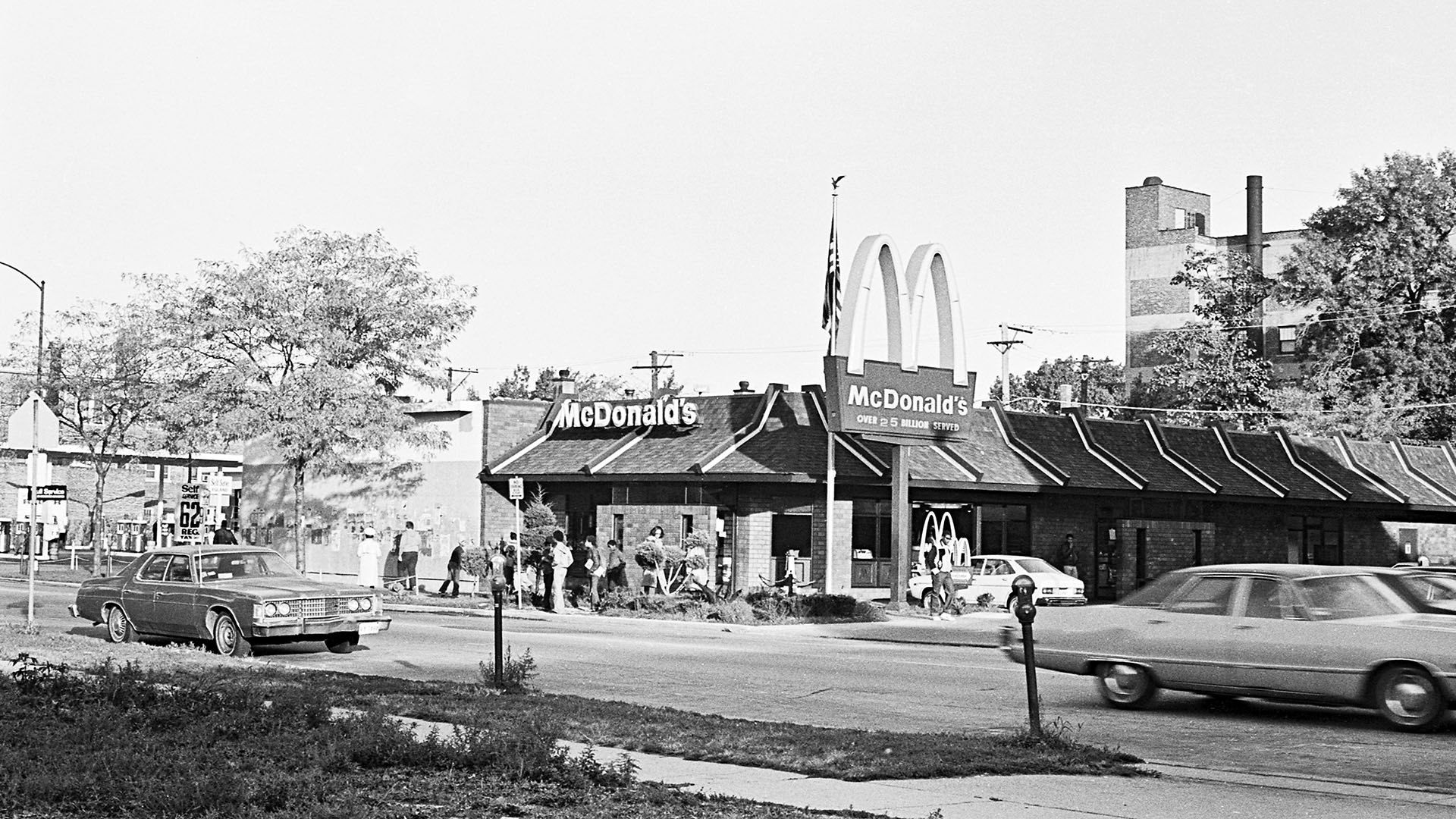
Stella Liebeck ordered coffee at a McDonald's drive-through in Albuquerque, spilled it in her lap while parked, and suffered third-degree burns over six percent of her body, requiring skin grafts and hospitalization. She sued McDonald's and was awarded $2.7 million in punitive damages by the jury, later reduced to $640,000, and the case was ultimately settled for an undisclosed amount.
The case became the shorthand for frivolous litigation in American culture, used in tort reform arguments and late-night jokes for decades. What those arguments typically omit: McDonald's had received over 700 prior complaints about burn injuries from its coffee, which it served at temperatures between 180 and 190 degrees Fahrenheit, significantly hotter than most competitors. The company had been warned by its own quality assurance manager that the coffee was too hot. Liebeck initially asked only for $20,000 to cover her medical bills. McDonald's offered $800.
The case did change things, just not in the way the jokes suggest. McDonald's and most other fast food chains lowered their coffee temperatures after the verdict. The punitive damages were specifically calculated at two days of McDonald's coffee sales revenue, which the jury felt was the appropriate signal to a corporation that had been warned repeatedly and done nothing. Whether you think the outcome was just or excessive, the facts of the case are considerably more complicated than the punchline suggests.
The Bigger Picture
What these ten cases have in common is that they were all decided by human beings, often by narrow margins, about questions that weren't settled until someone forced them into a courtroom. The rights you take for granted, the ones that feel obvious and permanent, exist because specific people with specific problems found attorneys willing to take their cases to the highest court in the country and argue them. The law doesn't change on its own. It changes because someone pushes it.
Comments