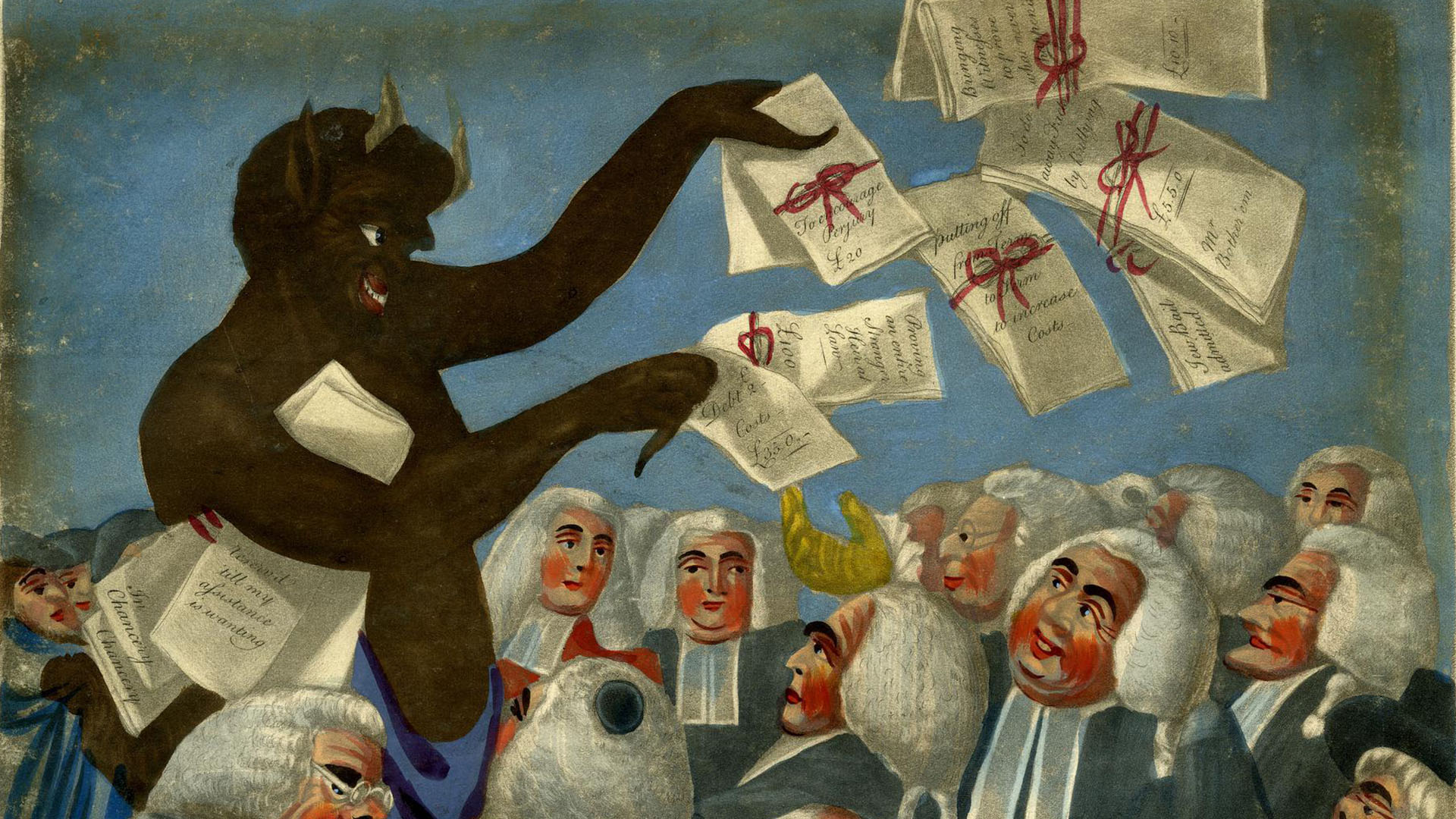
Let's get the obvious ones out of the way first.
Why don't sharks attack lawyers? Professional courtesy.
What do you call a lawyer who has gone bad? Senator.
Yes, those are clichés. You've heard them. Everyone has heard them. There are entire websites dedicated to cataloguing lawyer jokes, and most of them cycle through the same half-dozen premises: lawyers are greedy, dishonest, predatory, and more interested in fees than outcomes. The jokes have been around, in various forms, for centuries. Shakespeare's Dick the Butcher said "the first thing we do, let's kill all the lawyers" in Henry VI, which gets quoted so often as an anti-lawyer rallying cry that it's worth noting the actual context: it was a line spoken by a villain plotting to overthrow legitimate society, and killing the lawyers was the first step toward chaos. It was, arguably, a compliment.
But the jokes persist anyway, and they persist for reasons worth examining honestly rather than dismissing.
Where the Jokes Come From
Lawyer jokes, as a genre, tend to cluster around a few core grievances: that lawyers are expensive, that they speak in deliberately obscure language, that they argue both sides of anything for money, and that the legal system they operate within produces outcomes that feel arbitrary or unjust. These aren't entirely fabrications.
The cost complaint is real. Legal services are genuinely expensive for most people, and the gap between what someone needs and what they can afford is one of the most persistent failures of the American justice system. Access to legal representation is effectively rationed by income, and that's a legitimate grievance even if it's not the fault of any individual attorney.
The obscure language complaint is also real, at least historically. Legalese exists partly for precision and partly because the profession developed its own dialect over centuries and has been slow to abandon it even when plain English would serve better. The movement toward plain-language legal writing has made real progress, but plenty of contracts, briefs, and court documents are still harder to read than they need to be.
The "argue anything for money" complaint is more complicated. The adversarial system requires someone to represent every party, including parties whose position is wrong or whose conduct is indefensible. That's not a bug in the system; it's a foundational principle. But it looks, from the outside, like professional cynicism, and the jokes reflect that perception accurately even if the underlying principle is sound.
The Specific Bite of the Profession
Part of what makes lawyer jokes durable is that attorneys interact with people almost exclusively during difficult moments. You don't hire a lawyer when things are going well. You hire one when you're getting divorced, when you've been charged with something, when a contract has gone wrong, when someone has died and the estate is contested. The lawyer is present at some of the worst experiences of a person's life, and even when the outcome is good, the process is stressful and expensive.
That association is hard to shake. Doctors also see people at their worst, but the emotional valence is different: a doctor is trying to make you feel better. A lawyer is often trying to help you win, which implies there's something to lose, which implies conflict and cost and uncertainty. The help lawyers provide is real and often essential, but it doesn't feel the way medical help feels.
There's also the visibility factor. High-profile cases, especially criminal defense cases, put attorneys in the position of defending people the public has already convicted. The lawyer who gets a guilty-seeming defendant acquitted on a technicality becomes the face of a system that feels rigged, even if the "technicality" was actually a constitutional protection that exists for good reason.
What the Jokes Get Wrong
The jokes tend to flatten a profession of over a million people in the United States alone into a single caricature: the slick, amoral hired gun who will say anything for a fee. That's a real type, but it's not the whole picture and arguably not even the typical picture.
The solo practitioner doing family law in a mid-sized city, the public defender carrying a caseload twice what any one person should handle, the immigration attorney working with clients who have no other options: these aren't the lawyers the jokes are about, but they're a significant portion of the actual profession. The joke target is the corporate attorney or the ambulance chaser, and the entire profession absorbs the reputation.
There's also the inconvenient fact that most people, when they actually need a lawyer and find a good one, change their opinion of the profession fairly quickly. The jokes are abstract. The experience of having competent legal representation when you actually need it tends to be concrete and clarifying. As I've written before, the lawyers I've worked with have been direct, sensible, and easy to deal with, which doesn't make for a good joke but does describe the reality.
What the Jokes Get Right
Not nothing. The profession has real problems with cost and access that it has been slow to address. It has historically been insular and self-regulating in ways that don't always serve the public. The billable hour model creates at least the appearance of an incentive to prolong rather than resolve. And the legal system it operates within does produce genuinely baffling outcomes often enough that public skepticism isn't irrational.
The jokes also function as a pressure valve for a specific kind of frustration: the experience of being subject to a system you don't understand, that costs more than you expected, with an outcome you can't fully predict. That's an uncomfortable position to be in, and humor is one way humans process discomfort. The lawyer isn't usually the cause of all that uncertainty, but they're the most visible symbol of it.
One More Cliché
How many lawyer jokes are there? Just three. The rest are true stories.
That one works because it lands differently depending on who's telling it. A non-lawyer telling it is expressing grievance. A lawyer telling it is demonstrating self-awareness, which is, perhaps, the better look. The profession has earned some of its reputation, is working to shed some of it, and is going to be stuck with the rest regardless. The jokes will keep coming. The reasonable response is probably to understand where they come from, acknowledge what's fair in them, and get on with the work.
Comments