Hollywood has a complicated relationship with the legal profession. Most courtroom dramas play fast and loose with procedure, timeline, and basic reality in ways that make actual attorneys grind their teeth. But a handful of films have managed to capture something true about the law, whether in terms of procedural accuracy, emotional honesty, or the deeper moral questions the profession forces people to confront.
This list is not ranked. These are ten films worth watching, presented alphabetically, with a candid take on what each one gets right and where it takes liberties. If you're a lawyer and you've never seen some of these, fix that.
A Few Good Men (1992)
Tom Cruise as a JAG attorney defending two Marines accused of killing a fellow soldier, with Jack Nicholson as the commanding officer who ordered the extrajudicial punishment that led to the death. It's a Aaron Sorkin screenplay, which means the dialogue is electric and the pacing is relentless.
What it gets right: The film handles the tension between legal duty and institutional loyalty better than almost any other courtroom drama. The ethics of following orders versus following the law is a genuine and difficult question in military justice, and the film takes it seriously. The courtroom scenes are more procedurally grounded than most.
What it gets wrong: The climactic courtroom confession is pure fantasy. In reality, no experienced officer with legal counsel present would take the stand and incriminate himself under cross-examination the way Nicholson's character does. It's one of cinema's great moments and one of its least plausible.
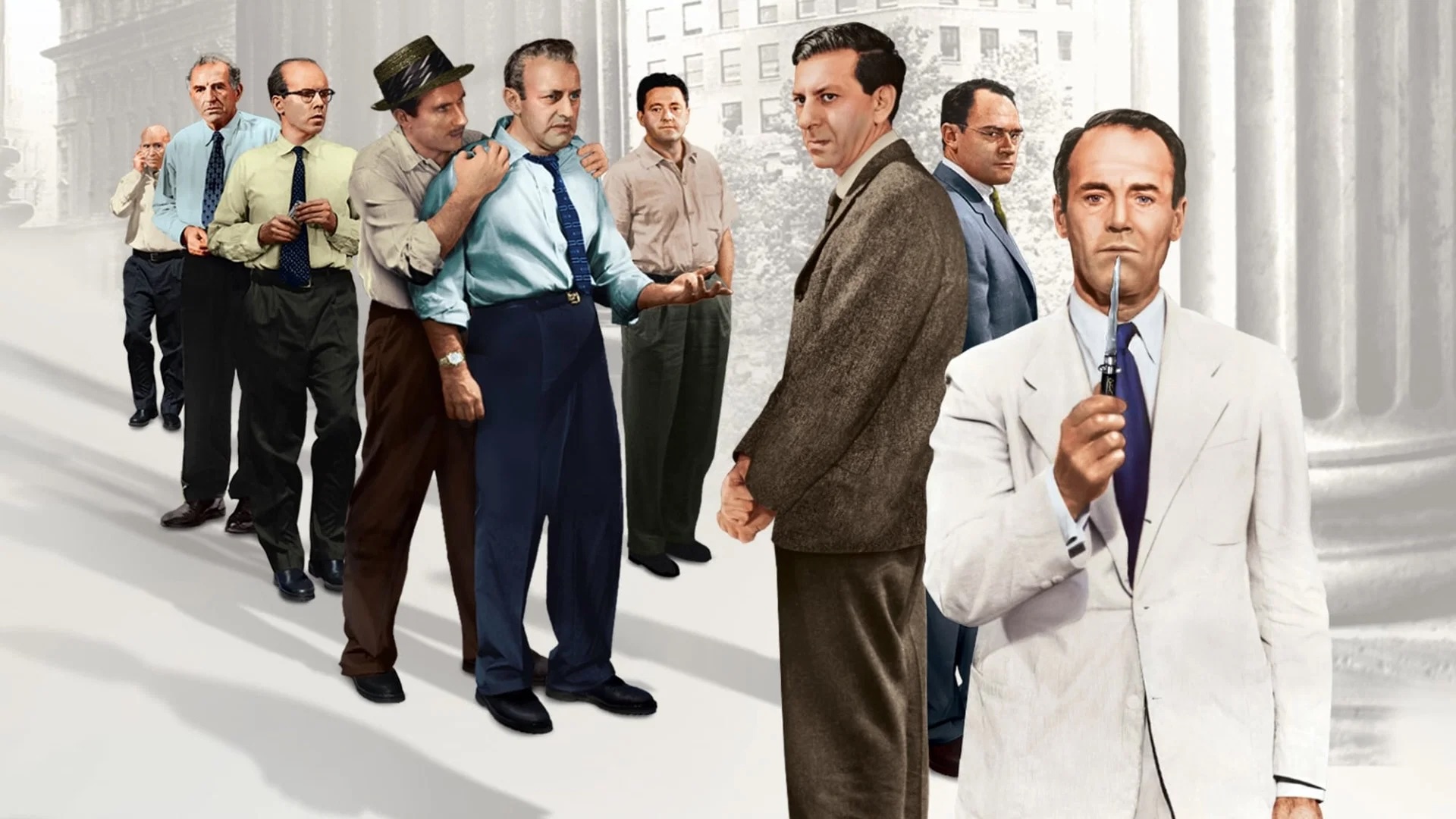
12 Angry Men (1957)
Twelve jurors deliberate the fate of a teenager accused of murder. Henry Fonda is the lone holdout against a guilty verdict. Shot almost entirely in a single room, it's one of the most gripping films ever made about the American justice system, and it doesn't have a single lawyer in a speaking role.
What it gets right: The dynamics of group deliberation, the weight of reasonable doubt, the way personal bias and life experience color how people evaluate evidence. It's essentially a masterclass on jury psychology. The film's argument that one person asking the right questions can change the outcome of a capital case is both idealistic and, occasionally, true.
What it gets wrong: The jury is entirely male, which was accurate for 1957 but worth noting. More substantively, the film's premise requires jurors to conduct their own investigation by handling physical evidence in the deliberation room, which would be highly irregular today. The idealism also runs a bit hot: real deliberations are messier and less philosophically tidy.
Erin Brockovich (2000)
Julia Roberts plays the real Erin Brockovich, a legal clerk with no law degree who built a massive environmental contamination case against Pacific Gas and Electric almost entirely through her own persistence and people skills. It's based on a true story, which gives it a weight that purely fictional legal dramas often lack.
What it gets right: The unglamorous, grinding nature of building a class action case from the ground up. The film is unusually honest about what legal work actually looks like before it gets to a courtroom, which is mostly document review, canvassing, and trying to convince skeptical people to trust you. The $333 million settlement it depicts was real.
What it gets wrong: Brockovich's role in the actual case has been disputed by some of the attorneys involved, who felt the film overstated her legal contribution relative to the work done by the firm's lawyers. The film also softens some of the messier aftermath of the settlement, including questions about whether the compensation adequately reached all plaintiffs.
Kramer vs. Kramer (1979)
Dustin Hoffman and Meryl Streep in a divorce and custody battle that remains one of the most emotionally devastating legal films ever made. It won five Academy Awards including Best Picture, and it holds up.
What it gets right: The human cost of contested custody litigation. The film doesn't take sides in a simplistic way and it shows how the adversarial process can force people to weaponize their worst moments against each other in ways that damage everyone, including the child ostensibly being protected. Family law attorneys have cited it as one of the more honest depictions of what their clients actually go through.
What it gets wrong: The courtroom scenes compress and dramatize in ways that real family law proceedings don't. The timeline is also accelerated considerably. But the emotional truth is accurate enough that the procedural shortcuts are easy to forgive.
Michael Clayton (2007)
George Clooney as a "fixer" at a large corporate law firm, not quite a lawyer in the traditional sense but embedded in the world of big firm practice, corporate cover-ups, and the moral compromises that come with representing powerful clients. Tilda Swinton won an Oscar for her performance as the in-house counsel trying to contain a catastrophic liability.
What it gets right: The moral architecture of corporate legal practice. The film is unusually sharp on the question of what it costs, personally and ethically, to spend a career helping powerful institutions avoid accountability. The Clooney character exists in the grey zone that a lot of legal professionals actually inhabit, doing work that is technically legal and personally corrosive at the same time.
What it gets wrong: The thriller elements push into implausibility toward the end. Real corporate legal cover-ups are considerably more bureaucratic and less cinematic than what the film depicts. But as a character study of what big firm practice does to people, it's honest in ways that most legal dramas aren't.
My Cousin Vinny (1992)
Joe Pesci as a brash New York personal injury attorney defending his cousin on a murder charge in rural Alabama, with zero criminal defense experience and a fiancée played by Marisa Tomei who inexplicably knows everything about automotive forensics. It's a comedy, and it is also, according to virtually every legal professional who has weighed in on it, one of the most procedurally accurate courtroom films ever made.
What it gets right: Almost everything procedural. Discovery, voir dire, witness examination, the rules of evidence, the dynamics between a fish-out-of-water attorney and a skeptical judge: the film gets the mechanics right in ways that were apparently vetted by actual lawyers during production. It's regularly used in law school courses as a teaching tool, which is remarkable for a comedy.
What it gets wrong: The overnight turnaround on Vinny's suit is implausible. More substantively, an attorney with no criminal defense experience and an active suspension from practice would face significant bar issues that the film glosses over entirely. But as a depiction of how a courtroom actually functions, it's hard to beat.
Philadelphia (1993)
Tom Hanks as an attorney with AIDS who is wrongfully terminated by his firm and sues for discrimination, with Denzel Washington as the homophobic personal injury lawyer who reluctantly takes his case. It was one of the first major Hollywood films to deal directly with HIV/AIDS and workplace discrimination against gay people.
What it gets right: The emotional and legal reality of employment discrimination cases, including how difficult they are to win and how much they cost the plaintiff personally. The film is honest about the fact that Hanks's character is dying throughout the litigation and that the legal victory, when it comes, arrives too late to mean what it might have meant otherwise.
What it gets wrong: Some legal commentators have noted that the case as presented would have been stronger and the legal strategy somewhat different than what the film depicts. The courtroom scenes are also more emotionally heightened than typical employment discrimination proceedings, which tend to be considerably drier.
The Rainmaker (1997)
Matt Damon as a freshly minted attorney with no money, no experience, and no firm taking on a massive insurance company that has been systematically denying legitimate claims. Based on John Grisham's novel, directed by Francis Ford Coppola, with Danny DeVito as a shady paralegal who knows more than he should about everything.
What it gets right: The power imbalance between a solo practitioner and a well-resourced corporate defendant is depicted with unusual honesty. The film captures the specific exhaustion and improvisation of being wildly outgunned in litigation, including the discovery games, the procedural traps, and the way large firms use delay and expense as a weapon. It also handles the ethics of settlement negotiation more thoughtfully than most legal films.
What it gets wrong: The climactic courtroom scenes go full Hollywood in ways that undermine some of the film's earlier realism. A verdict of the size depicted would also face significant appellate scrutiny that the film doesn't address. And Damon's character transitions from brand-new graduate to competent trial attorney implausibly fast, even by movie standards.
To Kill a Mockingbird (1962)
Gregory Peck as Atticus Finch, a small-town Alabama attorney appointed to defend a Black man falsely accused of raping a white woman in the 1930s. It won three Academy Awards and Peck's portrayal of Atticus has been cited by more attorneys as their inspiration for entering the profession than perhaps any other single cultural artifact.
What it gets right: The moral weight of the profession at its best. The film is less interested in procedural accuracy than in the question of what it means to do the right thing when the community, the system, and the outcome are all stacked against you. As a depiction of the ethical ideal of legal representation, it remains the standard.
What it gets wrong: Later scholarship, including a reexamination prompted by Harper Lee's second novel, has complicated the Atticus mythology considerably. The film presents him as an unambiguous moral hero, which the source material has since made more complicated. As a depiction of how Southern justice actually operated for Black defendants in the 1930s, it is also, necessarily, incomplete.
The Verdict (1982)
Paul Newman as Frank Galvin, a down-and-out Boston attorney who has spent years losing cases and drinking away his career, handed a medical malpractice case that should be settled quietly but that he decides to try instead. Directed by Sidney Lumet, written by David Mamet, and widely considered one of the greatest legal films ever made.
What it gets right: The texture of solo practice at its most precarious. Galvin is not a hero in the conventional sense: he's a mess, he makes bad decisions, and he's up against a defendant with vastly more resources and a better legal team. The film is unusually honest about what it feels like to be the underdog in litigation and about the personal cost of trying to do the right thing when you've already lost most of what you had. The courtroom scenes are tense and procedurally grounded.
What it gets wrong: A key piece of evidence introduced late in the trial would almost certainly be ruled inadmissible under modern evidentiary standards. The film also takes some liberties with how expert witnesses are retained and disclosed. But these are minor complaints about a film that otherwise captures the emotional and professional reality of litigation with rare accuracy.
One More Thing
If you disagree with this list, that's fine. Law movies inspire strong opinions, and there are reasonable arguments for films like Primal Fear, The Lincoln Lawyer, Judgment at Nuremberg, or And Justice for All that didn't make the cut here. The point isn't comprehensiveness. It's that these ten are worth your time, and between them they cover a wider range of what the legal profession actually is and feels like than most people outside it ever see.
Comments